By: Irene Boateng
Despite their contributions, women in extractives face exclusion from policies and profits. NETRIGHT’s recent
conference explored how to change that.
Ghana’s extractive sector is often hailed as a powerhouse—fueling over 40% of the country’s total
exports. Yet beneath the shine of these numbers, there lies a more quiet but powerful story: women are
driving this sector forward from the margins, often without the recognition or the resources they
deserve.
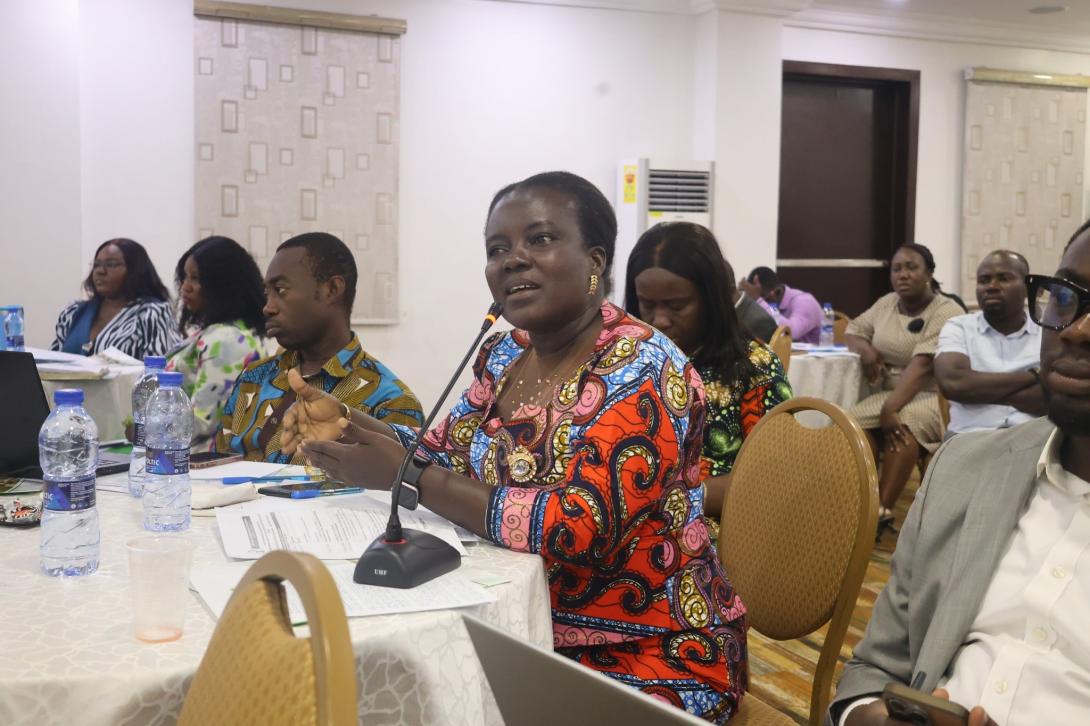
In April, the Policy Conference on Gender and Extractives was held in Accra, under the theme
Transforming Ghana’s Extractive Sector for Gender Justice and Inclusive Growth as part of their Power of
Voices (PVP) project. This conference, organized by NETRIGHT and TWN-Africa, brought together over
40 stakeholders, including government ministries, industry leaders, civil society, academia, and media,
all eager to engage in an urgent conversation about how to move from rhetoric to real inclusion in
Ghana’s extractive sector.
The Hidden Truth Behind Ghana’s Extractive Sector
On paper, Ghana’s extractive industry looks robust, but when you deeper look into the sector reveals
that the role of women is glaringly overlooked. Women make significant contributions to the sector, yet
they often work in unsafe, low-paying positions without the recognition or resources they deserve.
The facts speak for themselves:
- Women represent up to 50% of the small-scale mining workforce yet earn less than
their male counterparts and often occupy the most dangerous roles. - Only 15% of the formal mining workforce is female, and just 7–25% of senior roles in
mining companies are held by women. - Two out of 20 board members on the Ghana Gold Board are women.
90% of women in mining communities are unaware of how mineral revenues are used.
Despite policy language around gender inclusion, implementation remains weak, and the benefits of
Ghana’s resource wealth continue to bypass those most affected by extraction.
A Roadmap for Gender Justice and Inclusive Growth
The Conference did not only highlight the gaps but also ignited real, actionable change. Rev. Dr. Joyce
Aryee, the first female Chief Executive of the Ghana Chamber of Mines, delivered a powerful keynote,
reminding participants that gender equity in extractives is not simply about fairness—it is an “economic
imperative”.
This call for action was echoed in several key proposals, including:
1. Digital Transformation in Extractives – How Tech Can Level the Playing Field for
Women
• Build women’s capacity to use mining-related technologies and digital platforms.
• Strengthen girls’ pathways into STEM education connected to extractives.
• Leverage digital tools to improve access to information, markets, and peer networks.
Flagship Innovation:
A national STEM Innovation Challenge for senior high school girls, inviting them to solve
real-world problems in the extractive sector through technology. The model is designed to
scale nationally through STEM Centres, with government, industry, and civil society
collaboration.
2. Breaking Barriers to Finance – Strategies to Increase Women’s Access to Capital
• Establish gender-responsive financial policies, including loan disbursement targets for
women in mining.
• Provide training on financial literacy, documentation preparation, and contract
readiness.
• Support women-led SMEs to meet the procurement and compliance standards needed
for mining-related contracts.
Flagship Innovation:
A National Mentorship and Financial Readiness Programme to pair experienced women in
extractives with emerging entrants—focused on improving financial knowledge,
creditworthiness, and access to capital.
3. Legal and Policy Frameworks – Tackling Informal Labour and Exploitation
• Strengthen labour protections for women in the informal sector, including maternity
leave, PPE access, and anti-harassment measures.
• Support the formation of unions and women-led committees to represent informal
sector workers.
• Develop whistleblower systems to report rights violations anonymously, backed by legal
protections.
Flagship Innovation:
A Multilingual Informal Sector Rights App designed for women in informal mining to report
abuses, seek redress, and access legal and support services. The app would offer anonymous
reporting and tailored content in local languages.
4. Policy Recommendations for a Gender-Sensitive Extractive Sector
• Revise Ghana’s Minerals and Mining Policy and other legal frameworks to include
SMART gender provisions.
• Institutionalize gender impact assessments in all extractive policy processes and
implementation.
• Promote gender quotas across employment and governance in the sector, including in
local content provisions and board composition.
• Improve coordination between gender-focused institutions and ensure that mandates
are well-resourced and visible.
Flagship Innovation:
A National Gender and Extractives Coordination Platform—bringing together government,
industry, civil society, and community actors to track progress, align strategies, and ensure
gender is mainstreamed across the sector.
As panellist, Bashiratu Kamal (GAWU) boldly stated, “A woman on a board is not enough. Her presence
must be substantive, not symbolic.”
Shifting from Dialogue to Action
The way forward is clear: it’s time to move from inclusion in theory to impact in practice. NETRIGHT will
work on a policy brief based on the conference’s outcomes, with continued advocacy planned for
upcoming legislative reviews. The momentum has been set in motion, and the journey toward a more
inclusive, just, and sustainable extractive sector is well underway.
This conference wasn’t just an event—it was a call to action for transformation. And with the right
policies, women will not just be included—they will be leading the charge for a brighter, more equitable
future in Ghana’s extractive sector.
- Log in to post comments